
It’s not uncommon to hear that volume drives muscle hypertrophy.
Specifically, it’s thought more volume could produce more muscle hypertrophy, probably up until a certain point.
Read MoreIt’s not uncommon to hear that volume drives muscle hypertrophy.
Specifically, it’s thought more volume could produce more muscle hypertrophy, probably up until a certain point.
Read More
When training to build strength or muscle, most people use a sets and reps structure.
For instance, you may perform 3 sets of 6 reps on the bench press in a session.
However, something called the 3/7 method seems to be gaining some degree of popularity in recent years.
Read More
Drop sets are a so-called advanced muscle-building technique.
Generally, a drop set involves performing repetitions to failure with a given load and then immediately reducing the load (typically by 15-25%) and performing repetitions to failure again. Typically, one to three load reductions are done, but more can be done.
Read More
Biceps curls are most commonly performed with weights, be it with dumbbells or barbells.
However, what if you saw an individual biceps curling without any weight?
Read More
In response to resistance training, muscles typically increase in size.
One of the most commonly accepted and supported ways that this occurs is via an increase in the size of their individual muscle fibers. This whole process is called muscle hypertrophy.
However, another plausible way muscle could increase in size is through something called muscle hyperplasia.
Muscle hyperplasia refers to an increase in the number of muscles fibers within a muscle.
Read More
In the fitness world, sarcoplasmic hypertrophy seems to be quite controversial.
However, as we saw in a previous article (and as we’ll review in a moment), sarcoplasmic hypertrophy does indeed seem to be real, there are studies supporting the existence of it.
Read More
As we’ve explored in a previous article, it seems one of the primary ways muscles seem to grow is via an increase in the cross-sectional area of their muscle fibers.
There are 3 underlying ways a muscle fiber can increase in cross-sectional area: myofibrillar hypertrophy, sarcoplasmic hypertrophy, and myofibrillar packing.
Read More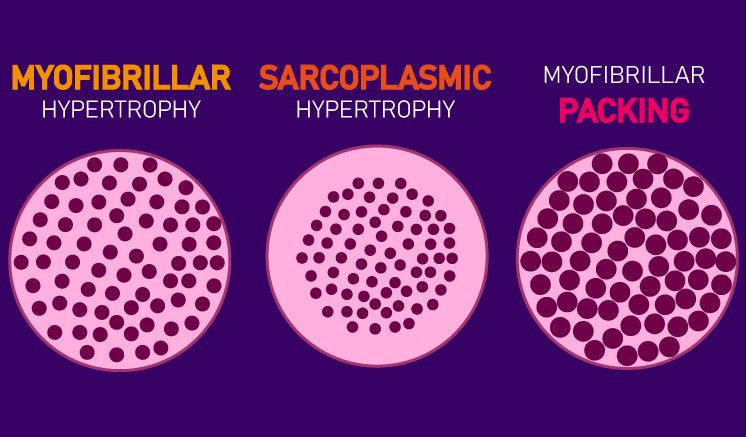
When it comes to muscles increasing in size, an increase in muscle fiber cross-sectional area appears to be one of the primary ways this occurs.
Specifically, there appear to be 3 underlying ways a muscle fiber can increase in cross-sectional area: myofibrillar hypertrophy, sarcoplasmic hypertrophy, and myofibrillar packing.
Read More
When you resistance train for a sufficient duration, be it with barbells, dumbbells, machines, or even your body weight, your muscles typically increase in size.
Read More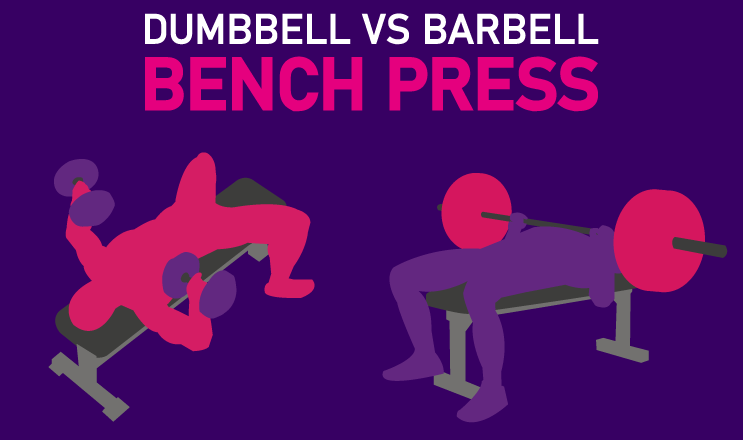
If you were to think of the most popular upper body exercise (or even the most popular exercise itself), there’s a good chance the bench press comes up.
Generally, when talking or thinking about the bench press, most people probably think of the barbell bench press.
However, there are a few other modalities you can perform the bench press with.
Read More